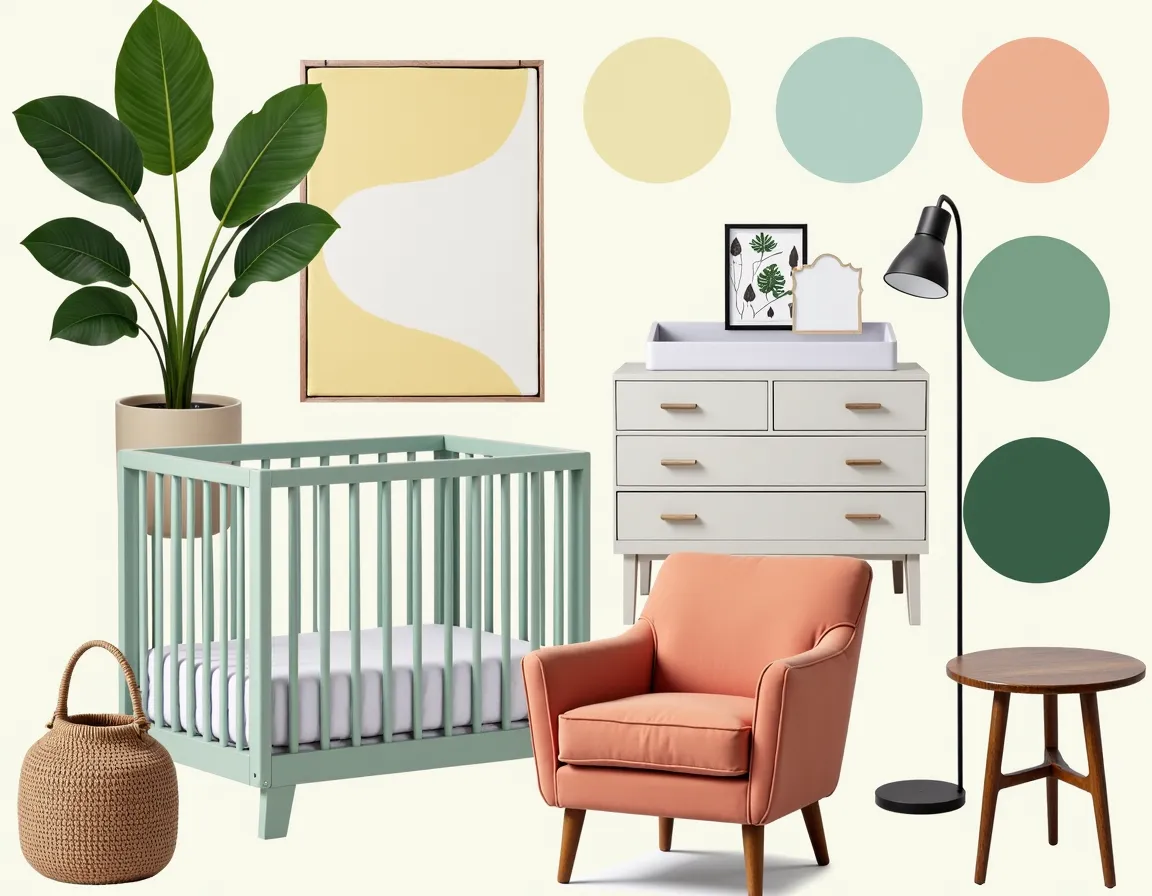
Home Office Mood Board Ideas: Design a Workspace That Works for You
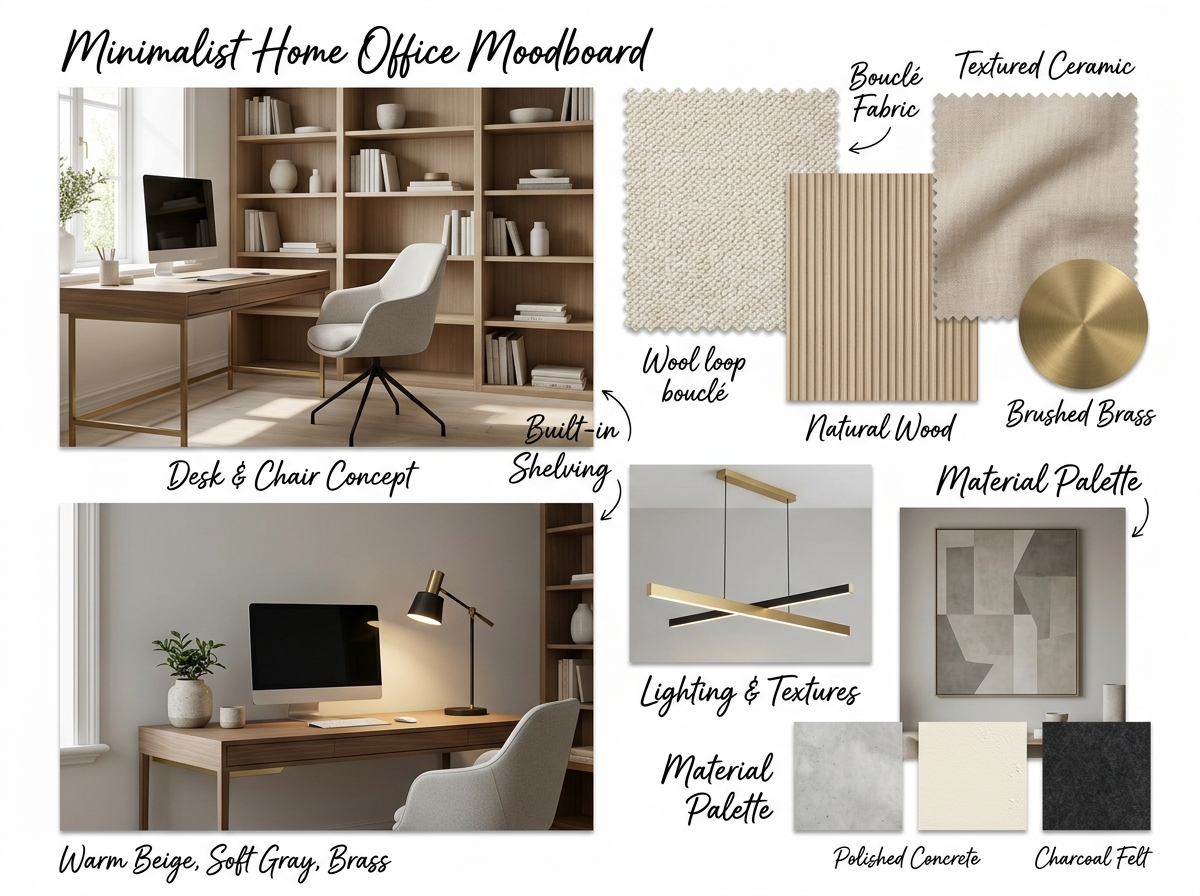
A home office is one of the spaces where design and function are in the closest daily contact. Get it right and the room supports focus, signals that you are at work, and reduces the friction between tasks. Get it wrong and the space feels uninspiring, cluttered, or so disconnected from your aesthetic that you start working everywhere except at your desk.
A mood board is a useful tool here because it lets you define the balance between productivity and personal style before you commit to furniture, storage, or paint. You can test how different layouts, materials, and palettes support the way you actually work, and catch conflicts between aesthetics and function early.
If you want to start quickly, MoodBoardAI can generate several workspace directions for you to compare. Once you have a direction you like, the mood board editor lets you build a precise plan with real furniture references, materials, and colors.
What to include on a home office mood board
A strong office mood board should cover the desk and chair, wall color or treatment, shelving or storage, lighting, flooring or rug, and decor that supports the mood you want. Do not overlook cable management, monitor setup, and any acoustic considerations if you take calls from the space. These are not aesthetic decisions, but they should still appear on the board as planned elements rather than afterthoughts.
The board should also reflect how the room will be used. A creative freelancer, a finance professional, and a home-based therapist all need different things from a home office. What supports deep writing focus is not the same as what supports video calls and client presentations.
Minimalist home office mood board ideas
Minimalist workspaces are among the most popular home office directions for good reason. Visual simplicity reduces distraction and makes the space feel calmer to work in. These boards typically combine a clean-lined desk, a task chair with good ergonomics, wall-mounted shelving without clutter, and a restrained palette of white, gray, warm oak, or pale plaster tones.
The challenge in minimalist offices is maintaining the look in daily use. A well-designed minimalist board anticipates cable management, closed storage for documents, and a desk surface that can be cleared easily. Including these elements in the board prevents the space from looking like aspirational photography but functioning like a paper pile.
Warm organic home office mood board ideas
Organic workspaces have become increasingly popular as an alternative to the cold, tech-forward aesthetic. These boards often feature solid wood desks, rattan or leather chairs, warm plaster or linen wall treatments, plants, handmade ceramics, and earthy palettes of olive, terracotta, warm white, and sand.
Organic offices tend to feel like spaces you actually want to spend time in rather than places you have to be. If you work long hours or find cold environments draining, this direction is worth exploring. The key is to keep the aesthetic warm without introducing so much tactile richness that the space becomes more living room than workspace.
Dark and moody creative studio mood board ideas
Not every home office needs to be light and open. Dark, moody workspaces can feel focused, private, and deeply personal. These boards often use deep wall colors like forest green, navy, charcoal, or dark plum, paired with warm lighting, rich wood tones, brass or bronze hardware, and a mix of books, objects, and artworks that inspire the occupant.
This direction works especially well in small, enclosed spaces or rooms with limited windows, where painting the walls a deep color removes the feeling of trying and failing to be bright. Dark rooms with excellent task lighting can be some of the most productive creative environments available.
Home office color palettes that support focus
Research consistently points to a few color directions that support focused work. Muted greens and blue-greens are associated with calm and concentration. Warm whites and natural materials reduce visual noise. Terracotta and warm earthy tones are grounding without being stimulating.
High-contrast, saturated, or very bright environments can increase energy but also increase distraction, which makes them better suited to short creative bursts than sustained analytical work. If your work involves long periods of reading, writing, or detailed analysis, err toward a softer palette.
Also consider the wall behind your camera if you regularly take video calls. A clean, well-lit wall in a neutral or warm tone makes a strong professional impression. Avoid very busy wallpapers, cluttered shelves, or strong colors that read poorly on screen.
Desk and chair: anchor pieces worth getting right
The desk and chair are to the home office what the sofa is to the living room. They anchor everything else aesthetically and practically. Include them early on your mood board, not as afterthoughts.
Ergonomics matter more than they are usually given credit for in design-forward spaces. A beautiful desk at the wrong height, or an elegant chair that becomes painful after two hours, is a failure regardless of how it looks on a mood board. The best office boards build aesthetic around ergonomic foundations rather than the other way around.
Sit-stand desks have become common enough that they appear in good-looking configurations. Height-adjustable frames with solid wood tops can be both functional and beautiful. Similarly, ergonomic task chairs now come in far more refined designs than they did a decade ago.
Lighting for a home office mood board
Home offices require two kinds of lighting: task lighting and ambient lighting. Task lighting delivers focused, adequate light to your work surface without glare on screens. Ambient lighting sets the overall mood and brightness of the room. Both should appear on your board.
Relying on ceiling overhead lighting alone tends to produce flat, harsh conditions. Adding a well-placed desk lamp, a floor lamp, and potentially wall sconces transforms the room into something that looks and functions much better for long working hours.
Warm bulbs at around 2700K to 3000K create a more comfortable, residential feel for spaces where the aesthetic matters. Slightly cooler bulbs at 3500K to 4000K are more energizing and better suited to very analytical work.
Storage and shelving: planning so the room does not age badly
Nothing destroys a home office aesthetic faster than visible clutter. Your mood board should include how storage will be handled. Floating shelves, enclosed cabinets, filing drawers, and desktop organizers all contribute to the long-term livability of the space.
Decide whether you want storage to be a design feature — open shelving with styled books and objects — or to disappear into the background with closed cabinetry. Both work, but mixing the two without a plan tends to create visual conflict.
Using AI to plan your home office design
AI tools work particularly well for home offices because many of the planning decisions involve trade-offs that are easier to visualize than to reason about abstractly. Generating a few different office directions in MoodBoardAI lets you quickly see whether a dark moody aesthetic actually appeals to you or only looks good in editorial photography. It also helps you test whether a particular palette reads as professional or too casual for your kind of work.
Once you have a direction you believe in, replace the AI-generated concepts with real furniture, specific paint colors, and actual products. The mood board should end as an actionable plan, not only as a source of inspiration.
Common home office mood board mistakes
The most common mistake is prioritizing aesthetics over how the room actually functions. Beautiful offices that lack adequate storage, proper lighting, or cable management fail quickly. The second is underestimating the impact of acoustics, especially if video calls are part of daily work. Hard surfaces, bare floors, and no soft furnishings create echo that makes remote communication difficult.
Treating the office as an afterthought — painting it the same color as the hallway and filling it with whatever furniture did not fit elsewhere — is also worth avoiding. A considered space, even a small one, returns daily dividends in concentration and satisfaction.
Frequently asked questions
What should a home office mood board include?
Include desk and chair references, wall color, lighting, storage, rugs or flooring, and any decor that sets the mood. Also plan for cable management and your video call background if relevant.
What colors help with concentration in a home office?
Muted greens, blue-greens, warm whites, and earthy neutrals are associated with focus. Avoid very saturated or bright palettes if you need sustained concentration over long periods.
How do I design a small home office?
Prioritize vertical storage, a wall-mounted or slim-profile desk, and limited decor that does not crowd the space. Use mirrors or light colors to make the room feel larger. Keep cables hidden and surfaces clear.
Should a home office match the rest of the house?
Not necessarily, but it should feel considered and deliberate. A darker, more focused office can coexist with a lighter, airier home if the transition between rooms feels intentional rather than accidental.
What is the best desk setup for a home office?
The best setup is ergonomic first: correct desk height, monitor at eye level, and a chair that supports your back for the duration of your working day. Build the aesthetic around those functional requirements.
Can AI help me design a home office?
Yes. AI can generate several workspace directions quickly so you can compare aesthetics before committing to furniture or paint. Use AI to explore, then refine the best direction into a detailed, actionable plan.
How do I make a home office look professional on video calls?
Keep the wall behind you clean and uncluttered. Use warm, diffused front-facing light rather than a bright window behind you. A well-styled bookcase or a simple, neutral wall both read professionally on screen.