How I Finally Nailed the Japandi Look with a Mood Board
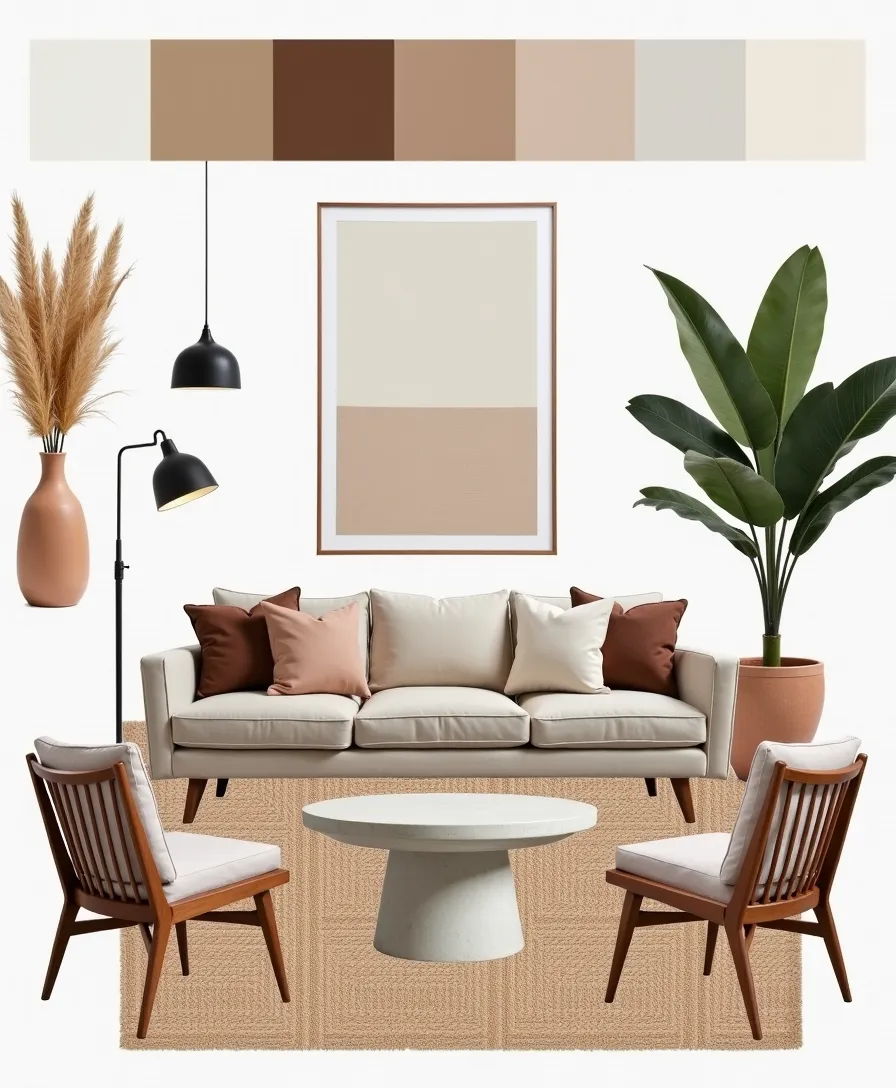
Japandi mood board planning is what finally turns a vague love of soft neutrals and minimalist rooms into a home that actually feels calm. Japandi sits in the narrow space between too sparse and too busy. It borrows Japanese wabi-sabi, Scandinavian warmth, and a stricter edit than most people expect. If you love natural interiors but your past attempts ended up cold, cluttered, or vaguely unfinished, a mood board is the fastest way to fix that before you buy anything.
We've worked with thousands of designers and homeowners exploring Japandi, and there is a familiar cycle: you save room after room, notice the same low furniture, pale woods, and textured fabrics, then realize that copying one image at a time does not create a cohesive home. That is why the best process starts with a board, not a shopping cart. A good board lets you compare materials, undertones, silhouette, lighting, and emotional tone in one place. Our AI mood board generator makes that process much faster — with MoodBoardAI AI generator and the MoodBoardAI mood board editor, the workflow gets much faster because you can test the room direction before committing to paint, upholstery, or larger anchor pieces.
Key Takeaways
- Japandi blends Japanese calm with Scandinavian warmth, so the room should feel edited, textured, and emotionally warm rather than stark.
- The strongest Japandi mood boards use warm neutrals, raw wood, linen, rattan, ceramics, and deliberate negative space instead of shiny finishes or trend-heavy decor.
- Color discipline matters: warm whites, sand, greige, dusty sage, charcoal, and terracotta work better than cool greys or icy whites.
- Use internal comparisons like interior design color palette guide, living room mood board guide, and bedroom mood board ideas to keep the board practical.
- Try it now: build the first draft in MoodBoardAI AI generator, then refine the final layout inside the MoodBoardAI mood board editor.
What Makes Japandi Different from Plain Minimalism?
Minimalism says remove everything you do not need. Japandi says keep only what carries purpose, material depth, or emotional value. That difference matters because a purely minimalist room can look polished and still feel impersonal. A Japandi room should feel quieter, warmer, and more human. The negative space is not emptiness. It is breathing room. The calm comes from editing, not from deprivation.
Natural materials do most of the work. Raw wood with visible grain, linen that wrinkles honestly, rattan with an uneven weave, handmade ceramics with soft irregularity, and wool or boucle that adds quiet softness all support the style. Glossy lacquer, sharp chrome, and overly slick finishes do the opposite. They remove the softness that lets a minimal room stay livable. If you want a useful comparison point, the broader rules in how to create a mood board for interior design help explain why texture and hierarchy matter long before shopping starts.
Furniture proportions also shift. Japandi rooms often sit lower to the ground, which creates a grounded feeling that reads immediately as calm. Scandinavian influence shows up in function and simplicity, while Japanese influence shows up in restraint and the respect for empty space. That combination is why the style pairs so naturally with the workflows in mood board creation with AI and best free moodboard tools compared: the style depends on comparing subtle differences, not just collecting attractive photos.

How Do You Build a Japandi Mood Board That Actually Guides Decisions?
Start with a filter, not with a huge pile of images. Before adding any reference, ask whether it feels calm, tactile, and timeless. Would you still want to live with it in ten years? Does it rely on trend styling, or does it still look grounded if the accessories disappear? That one question eliminates a lot of false positives. A board that feels coherent in Japandi almost always looks more restrained than people expect on day one.
The board itself should mirror the style. Keep the composition airy. Leave visual gaps. Group palette, materials, furniture, and lighting so you can judge the room as a system rather than as disconnected inspiration. The process is similar to the structure in dining room mood board ideas and bathroom mood board guide: choose one anchor, then let every later choice support it.
A strong first draft usually includes one anchor furniture image, two or three material references, a tightly controlled palette, one lighting reference, one plant or ceramic reference, and two full-room inspiration images. That is enough to define the atmosphere without turning the board into visual noise. When you need to test variations quickly, use MoodBoardAI AI generator for the broad room direction and then narrow the final version inside the MoodBoardAI mood board editor.
Which Japandi Colors Actually Work in Real Rooms?
Japandi lives in warm neutrals. Think sand, pale linen, warm white, soft taupe, muted greige, mushroom, dusty clay, and warm charcoal. These colors are not interchangeable. The undertone matters. A cool white can make the whole room feel sterile. A blue-grey can pull the palette toward modern industrial. A warm white or warm greige supports the softness that Japandi needs.
The most useful way to think about the palette is a simple 70-20-10 structure. Around 70 percent of the room should be the neutral base. Around 20 percent can come from secondary tones like dusty sage, soft charcoal, or muted terracotta. The remaining 10 percent often comes from material accents rather than loud color: black iron, dark walnut, aged brass, smoked glass, or darker ceramics. If you need help judging whether the palette is warm enough, compare your board against the examples in interior design color palette guide and earth tone color palette 2026 mood board.
Paint swatches alone are not enough. Pull imagery, wood tones, upholstery, and stone references together so you can see contrast. A beautiful wall color can still fail once it sits next to the wrong oak tone or a sofa fabric that reads too cold. That is why digital testing is so useful. The board gives you system-level clarity, and the room preview inside MoodBoardAI AI generator helps you see whether your Japandi direction still feels inviting once it is applied to a real space.

What Should You Include Beyond Colors?
Texture deserves its own section on the board because Japandi without texture becomes plain beige minimalism. Pull references for natural linen, raw or lightly oiled wood, woven rattan, hand-thrown ceramics, wool, and soft upholstery with visible depth. When the material looks too manufactured, too glossy, or too perfect, the room starts losing the wabi-sabi half of the style.
Greenery should stay controlled. A single sculptural plant, one branch arrangement, or one well-chosen vessel is usually enough. Japandi is not maximal plant styling. It is one deliberate natural gesture. Lighting should follow the same rule. Choose warm, diffuse light sources that create atmosphere in the evening and avoid fixtures that feel decorative for their own sake.
It also helps to keep one reference for craft. That could be a ceramic bowl, a stool with visible joinery, a paper lantern, or a handwoven basket. These details teach the room how to feel finished without becoming cluttered. If you are uncertain how much layering is enough, cross-check your board with living room mood board guide, bedroom mood board ideas, and kitchen mood board ideas and inspiration to make sure each category is present but restrained.

Which Rooms Suit the Japandi Approach Best?
Living rooms and bedrooms are the most natural fit because they benefit most from visual calm. In a living room, Japandi works when the space feels relaxed enough to use every day, not styled to the point of discomfort. Low seating, a simple coffee table, a natural rug, and a very restrained art story are usually enough. The board should show the full relationship between upholstery, rug texture, table material, and lighting before you source anything.
Bedrooms often deliver the clearest Japandi win. The lower bed profile reduces visual bulk, linen bedding adds softness without fussiness, and a quieter palette makes the room easier to inhabit at night. If you are building a whole-home direction, it helps to compare the bedroom logic with the lessons in bedroom mood board ideas and the palette structure in interior design color palette guide.
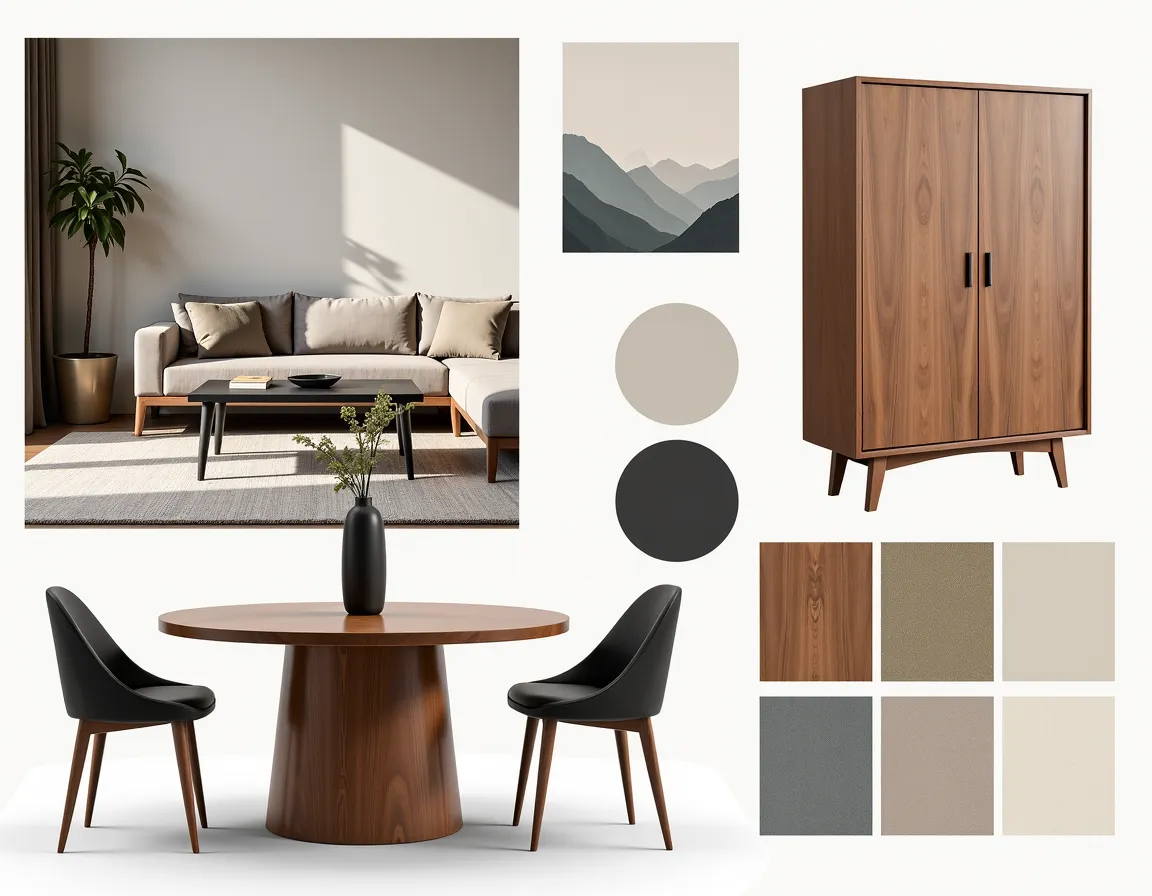
Kitchens and dining spaces demand more restraint because hard finishes make mistakes more permanent. Use your board to confirm cabinetry tone, hardware finish, worktop material, stool or chair shape, and whether open shelving is truly necessary. Dining zones can feel especially strong in Japandi when the wood tone stays consistent and the lighting stays soft, which is why dining room mood board ideas is a useful internal reference before locking the scheme.

What Is the Japandi Furniture Formula?
You do not need a full replacement project. In fact, Japandi often improves when some pieces already carry age, patina, or history. What matters is line, proportion, and material honesty. Look for low-profile sofas and chairs, dining tables in solid wood, storage that hides clutter, shelving with clean joinery, and accent pieces that earn their place through craftsmanship rather than novelty.
Add real buyable items to the board as early as possible. This is the move that turns a mood board into a practical design document. Once you have palette, texture, lighting, and specific furniture on the same page, the gaps become obvious. Either the wood tone fights the walls, the fabric reads too cool, or the room suddenly looks too precious. Catching that early saves money and decision fatigue.
For users who like to move from inspiration to product-level thinking quickly, combining MoodBoardAI AI generator with the MoodBoardAI mood board editor is more efficient than rebuilding the concept in general design software. It gives you a faster way to judge whether one chair, table, or light fixture keeps the board coherent. If you want a wider workflow benchmark, compare your process with best free moodboard tools compared.
What Mistakes Usually Derail a Japandi Room?
The first mistake is going too grey. Cool greys and bright whites flatten the room and push it toward sterile minimalism. The second is underfurnishing in the wrong way. Japandi is not one sofa in an empty box. It is exactly enough furniture, exactly enough texture, and exactly enough visual rhythm. The third is mixing too many wood tones. Pick a dominant finish and stay disciplined.
Another common problem is decorating before the anchors are resolved. If the sofa, bed, rug, table, and paint still feel uncertain, buying accessories will not save the project. The better move is to return to the board, remove the conflicting references, and simplify until the emotional direction becomes obvious again. The same discipline appears across bathroom mood board guide and how to create a mood board for interior design: when the board gets muddy, edit harder.
Finally, copying AI outputs too literally can backfire. Use generated images and collage boards as decision tools, not as rigid shopping lists. The goal is to preserve the feeling of the room while adapting it to your own dimensions, budget, and daily life. If one image teaches you the right wood tone, another confirms the right lighting, and another proves the room needs less contrast, the board has already done its job.
How Do You Use AI to Test a Japandi Vision Before Buying?
In our experience helping designers test Japandi concepts, this is where AI tools are actually useful instead of gimmicky. Japandi depends on nuance. A white that is too cool, a wood tone that is too orange, or a chair with the wrong visual weight can push the room off course. Seeing those choices in context is much more valuable than staring at isolated product photos. Use MoodBoardAI AI generator to test full-room direction, then move into the MoodBoardAI mood board editor when you need a cleaner final board for yourself, a partner, or a designer.
A strong self-check is to compare your final board against a few adjacent internal references: interior design color palette guide for undertones, earth tone color palette 2026 mood board for warmer combinations, and living room mood board guide for room-level balance. If your Japandi board still feels calm after those comparisons, it is probably coherent enough to start sourcing from.
The best part is that you do not need endless iterations. Most good Japandi boards settle after a few serious rounds of editing. We have seen hundreds of boards come together after just two or three focused passes. Once the room feels clear, stop collecting and start narrowing. That is the real signal that the board is working.
Japandi vs Other Interior Design Styles
Understanding how Japandi compares to related styles helps you identify which elements to emphasize on your mood board. Here is a side-by-side comparison of Japandi against five styles it is often confused with:
| Style | Key Materials | Color Palette | Mood | Best Room |
|---|---|---|---|---|
| Japandi | Raw wood, linen, ceramics, rattan | Warm neutrals, dusty sage, charcoal | Calm, grounded, tactile | Living room, bedroom |
| Scandinavian | Light birch, wool, cotton, metal | White, light grey, pastel accents | Bright, cozy, playful | Any room |
| Japanese Traditional | Bamboo, shoji paper, tatami, stone | Muted earth tones, black, cream | Serene, spiritual, minimal | Meditation room, bedroom |
| Minimalist | Glass, steel, concrete, lacquer | Monochrome, stark white, black | Clean, precise, impersonal | Office, bathroom |
| Wabi-Sabi | Aged wood, clay, rough stone, patina metals | Muted browns, rust, weathered grey | Imperfect, organic, contemplative | Entryway, kitchen |
| Organic Modern | Curved wood, boucle, marble, brass | Warm beige, ivory, olive, caramel | Soft, sculptural, luxurious | Living room, dining room |
What Questions Do People Still Ask About Japandi Mood Boards?
What is Japandi style in simple terms?
Japandi is a design hybrid that blends Japanese minimalism and wabi-sabi with Scandinavian hygge warmth. The result is a calm, intentional interior that feels minimal without feeling cold, using natural materials, warm neutrals, and low-profile furniture.
What colors are used in Japandi interiors?
Japandi interiors usually rely on warm neutrals like sandy beige, warm white, soft taupe, warm grey, and muted greige. Accent colors are typically dusty sage, soft charcoal, terracotta, black iron, dark walnut, or aged brass.
Can I create a Japandi look on a budget?
Yes. Japandi works well with second-hand pieces, worn wood, aged ceramics, vintage linen, and simple furniture with strong lines. The focus should be on material quality, warmth, and restraint rather than buying everything new.
How is Japandi different from Scandinavian design?
Scandinavian design is often lighter and more playful, while Japandi is more restrained and grounded. Japandi borrows Scandinavian warmth and function but pairs them with Japanese minimalism, lower furniture profiles, and a stronger appreciation for imperfection.
What is a Japandi mood board and why do I need one?
A Japandi mood board collects your palette, textures, furniture references, lighting, and inspiration images before you buy anything. It helps you keep the room cohesive and catch mismatched finishes or tones before they become expensive mistakes.
What wood tones work best in a Japandi interior?
Light to mid-tone woods with visible grain work best for Japandi. Honeyed oak, pale ash, light walnut, and natural birch all support the style well. Avoid heavily stained, glossy, or orange-toned wood finishes. The key is consistency — pick one dominant wood tone and carry it through the room rather than mixing multiple competing finishes.